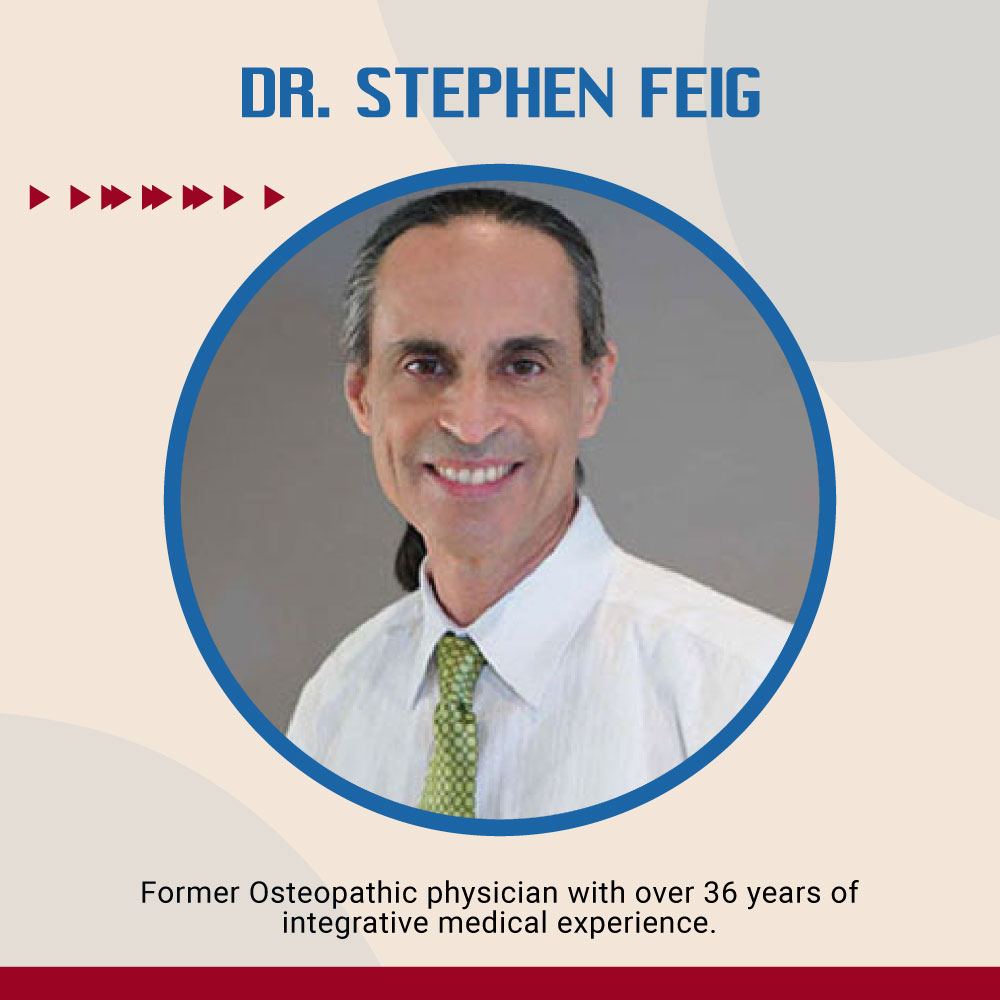
About Dr. Stephen Feig
Clinical Approach
Dr. Stephen Feig combined the precision of Western medicine with a holistic understanding of the body’s connections. His clinical approach was grounded in the belief that true healing involves addressing the root causes of imbalance. Dr. Feig was especially attuned to the role of trauma and how it affects the mind and the body. Over his 36 years of experience, he integrated functional medicine, nutritional science, and mind-body practices to support a person’s physical, emotional, and spiritual aspects. He worked with patients facing chronic conditions that traditional medicine frequently overlooks, such as chronic fatigue, hormonal imbalances, irritable bowel syndrome, and autoimmune disorders.
Evaluation and Testing
Dr. Feig used testing judiciously, selecting only those modalities that provided meaningful data and improved the accuracy of treatment decisions. This included advanced stool analysis, hormone metabolite panels, micronutrient assessments, inflammation markers, immune system profiles, or toxic burden panels. He interpreted results within the context of the patient’s clinical presentation, avoiding the error of treating lab results in isolation.
This integrated review allowed him to identify patterns that may not be apparent through standard protocols. It also enabled him to correct deficiencies, reduce exposures, and support systemic balance in ways that directly improved patient well-being. He applied measurable interventions with careful oversight, adjusting as the patient’s physiology responded.
Areas of Clinical Focus
Gastrointestinal Health
Dr. Stephen Feig evaluated the gastrointestinal system as a central regulator of immune tone, brain health, metabolic efficiency, neurological health, and detoxification. He applied functional stool analysis, digestive health profiling, and microbial assessments to determine how well the gut supported the rest of the body. His treatment strategies aimed to restore barrier function, modulate immune responses, and correct systemic regulation deficiencies.
Hormonal and Metabolic Regulation
Hormonal balance is essential for optimal physical health, good mood, and cognitive stability. Dr. Feig reviewed endocrine function using laboratory analysis, clinical markers, and careful observation of trends. He addressed adrenal rhythm, thyroid regulation, sex hormones, and insulin dynamics, tracking how these systems interact and supporting them with appropriate nutritional and botanical interventions.
His approach avoided overcorrection. He used precise data to guide recommendations and monitored progress and tolerance, allowing for gradual restoration of hormonal balance with minimal adverse effects. As endocrine patterns normalized, patients reported improved energy, mental clarity, sleep stability, and mood regulation.
Fatigue and Immune Imbalance
A significant portion of Dr. Feig’s work involved individuals with immune dysregulation, including patients with autoimmune conditions, persistent infections, chronic inflammation, or hypersensitive responses. He examined immune markers, assessed antigen exposure, and investigated environmental contributors to immune imbalance, considering the role of gastrointestinal permeability, toxic burden, mold exposure, and inflammatory signaling.
He used nutritional, lifestyle, and targeted botanical methods to reduce immune reactivity and support tissue repair, allowing for improved immune resilience over time through this systems-based approach.
Chronic Inflammation and Stress Response
Dr. Stephen Feig also analyzed inflammatory load, cardiovascular inflammatory markers, and the cumulative impact of long-term stress. He addressed elevated inflammatory markers and stress-responsive systems with clinical interventions that supported parasympathetic balance, reduced reactivity, and rebuilding adaptive function. His experience allowed him to distinguish between surface symptoms and core dysregulation, helping patients avoid years of circular treatment.
A Career Based on Listening and Precision
One of the most distinguishing features of Dr. Feig’s care was the time and attention he gave to each patient. Every patient was treated with respect and compassion. His consultations were structured around dialogue, observation, and interpretation. He did not approach cases with assumptions or templates. Instead, he began by reviewing medical history, lifestyle, stress exposure, and symptom patterns, then documented, reviewed prior records, and ensured each recommendation was medically appropriate and well understood. He avoided unnecessary complexity and remained grounded in what could be supported by data, clinical observation, and reasonable therapeutic goals.
Long-Term Clinical Relationships
Many of Dr. Feig’s patients remained under his care for extended periods, benefiting from the continuity that allowed for refinement, adaptation, and progress that episodic treatment cannot achieve. Over time, patients came to understand their physiology and gained confidence in managing their health through informed action.
These long-term relationships reflected Dr. Feig’s professional skill and interpersonal integrity. He maintained clear boundaries and upheld high standards of care, ensuring that all decisions were made transparently and in alignment with medical ethics. Incorporating thousands of hours of postgraduate study, Dr. Feig stayed updated on the latest advancements in medical care while preserving a holistic approach that honored each patient’s journey.
Professional Education and Lecturing
In addition to his clinical work, Dr. Feig spent decades contributing to medical and public education. He lectured on digestive health and nutritional science for over 30 years. His presentations were known for their lighthearted humor, clarity, and clinical relevance. He avoided speculation and focused on established mechanisms that could guide real-world care.

Portfolio
Dr. Stephen Feig